Major SEL & Behavior Frameworks Pre-K Programs Use Today
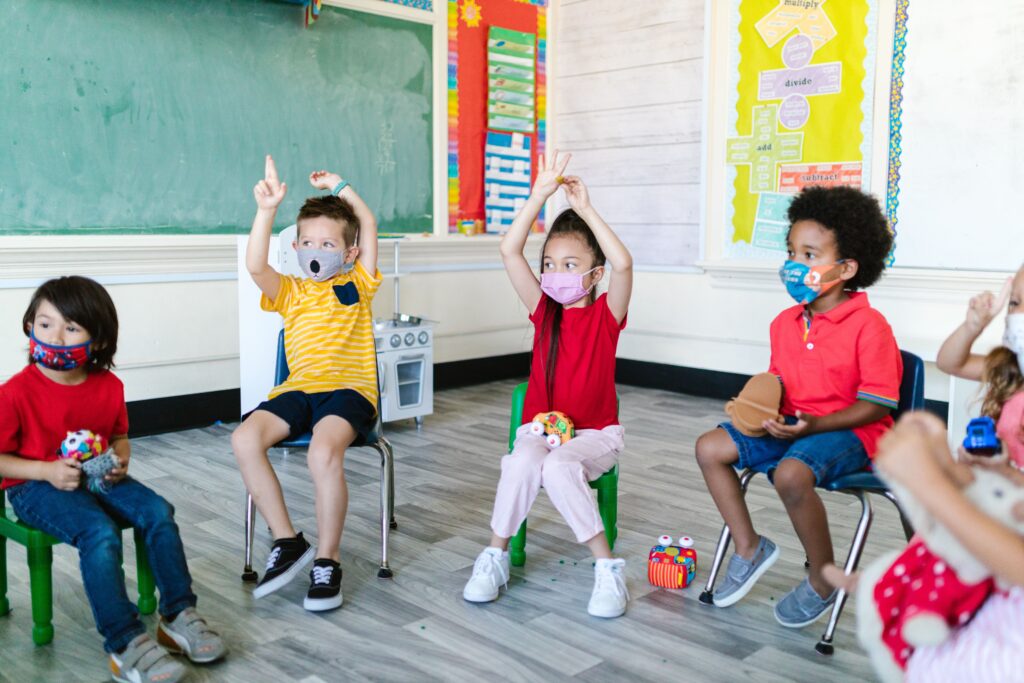
Picture a Pre-K classroom mid-morning. Three children are in a tense standoff at the block area. One teacher is trying to redirect, another is rocking a child who has been crying since drop-off, and circle time is supposed to start in four minutes. In moments like this, the framework on the bulletin board is no longer abstract — it is either helping or it is not.
For decades, the early childhood field has built and refined programs designed to help educators handle exactly these moments. A recent scoping review of the published literature on Pre-Kindergarten behavioral modification and social-emotional learning frameworks identified five that dominate the conversation in Pre-K classrooms today:
CASEL, Second Step, PATHS, Conscious Discipline, and PBIS [1]. Each was developed for a different purpose. Each has contributed something real to the field. And each occupies a different position in the toolkit available to teachers, curriculum developers, and administrators trying to support young children’s behavior and emotional development.
This article maps what those five frameworks are, what they offer, and how they fit into the current Pre-K landscape — without ranking them or critiquing them. Understanding what each framework brings to the table is the necessary first step before any discussion of where they fall short or what a Pre-K classroom may still need.
Why These Five Frameworks Matter for Pre-K Today
The case for using a structured social-emotional learning (SEL) or behavioral framework in Pre-K is not abstract. According to a national survey cited in the scoping review, only about 40% of Pre-K classrooms in the United States were implementing any structured social-emotional learning program at all [1][6]. That means most preschool classrooms are operating without a shared system for teaching emotional skills or responding to behavior.
The cost of that gap is high. Federal data has documented that Pre-K children are expelled at a rate roughly three times higher than children in any other grade level, with somewhere between 5,000 and 7,000 publicly funded Pre-K students removed from programs every year [1][7]. Structured frameworks exist, in part, because the field has long recognized that consistent, programmatic responses to behavior reduce the kinds of discretionary decisions that lead to disproportionate disciplinary action.
For teachers, the right framework can change the texture of the day. For curriculum developers, it sets the design parameters for what a preschool SEL curriculum can actually deliver. For administrators, it shapes professional development, hiring, and the family-facing identity of the program. Knowing the major frameworks is foundational to all three roles.
A Quick Map of the Five Frameworks
The five major SEL and behavior frameworks used in Pre-K today are CASEL, which provides shared language for social-emotional learning; Second Step, a widely scaled scripted curriculum; PATHS, which focuses on emotional competence; Conscious Discipline, a teacher mindset framework; and PBIS, a tiered behavioral response system originally developed for school-wide implementation [1].
The Five Frameworks at a Glance
| Framework | Type | Primary Contribution | Source Reference |
|---|---|---|---|
| CASEL | Conceptual framework | Shared language and core competency model for SEL | [1] |
| Second Step | Scripted SEL curriculum | Classroom-ready lessons used in tens of thousands of classrooms | [1][2] |
| PATHS | SEL curriculum | Measurable gains in children’s emotional competence | [1][3] |
| Conscious Discipline | Teacher-focused framework | A different way for teachers to understand behavior | [1][4] |
| PBIS | School-wide tiered system | A structured tiered response to behavior | [1][5] |
These five represent the bulk of the field, but not its entirety. Other approaches — mindfulness-based programs, executive function training, and co-regulation methods — also appear in the literature and are covered separately in this content series.
CASEL: The Shared Language of Social-Emotional Learning
The Collaborative for Academic, Social, and Emotional Learning (CASEL) is not a curriculum. It is a framework — a way of organizing what SEL is and what it should include. Its primary contribution to the field, as the scoping review notes, has been giving educators, researchers, and policymakers a shared language for social-emotional learning [1].
That shared language matters more than it might sound. Before a common model existed, programs claiming to teach SEL could mean very different things by it. CASEL’s organizing model gave the field a way to name and group the competencies that other programs could then map onto, allowing curriculum developers, school administrators, and researchers to talk about the same things using the same terms.
For Pre-K educators specifically, CASEL provides the conceptual backbone that most preschool SEL curricula are built around. When a program claims to teach social-emotional learning, it is usually working from some version of the competency model CASEL articulated. The framework itself does not tell a teacher what to do on a Tuesday morning, but it tells the field what it is collectively trying to teach [1].
Second Step: Scripted Lessons at Scale
If CASEL provides the language, Second Step is one of the most widely used curricula that puts that language into classrooms. Developed and distributed by Committee for Children, Second Step has reached tens of thousands of classrooms [1][2].
The defining feature of Second Step is its scripted lesson structure. Teachers receive prepared lessons with clear instructions, materials, and sequencing, which makes the curriculum genuinely usable for educators without specialized SEL training [1]. For a preschool SEL curriculum, that level of structure removes a significant barrier to consistent implementation — a barrier that many programs encounter when they try to deliver social-emotional content without standardized lesson materials.
The Pre-K version of Second Step focuses on early skills: emotional vocabulary, basic problem-solving, learning to take turns, and recognizing how others feel. Its appeal to administrators is straightforward. It is a research-based social-emotional learning curriculum with a track record at scale, ready for classroom use without months of professional development. Among the social emotional learning curriculums most commonly named in Pre-K planning conversations, Second Step appears consistently because it gives teachers something they can open and use.
PATHS: Promoting Alternative Thinking Strategies
PATHS — Promoting Alternative Thinking Strategies — has a longer empirical history than most SEL programs. The foundational research by Greenberg and colleagues demonstrated measurable gains in children’s emotional competence following implementation of the PATHS curriculum [1][3].
PATHS centers on teaching children to understand and label emotions, develop self-control, and use structured problem-solving steps when conflicts or strong feelings arise. The curriculum has been studied in a range of populations and is one of the more frequently cited SEL programs in peer-reviewed research, which is part of why it appears in nearly every conversation about evidence-based SEL.
Its presence in the Pre-K landscape comes with one important caveat the scoping review surfaces: PATHS was originally designed for elementary students [1]. Programs serving 3-to-5-year-olds have adopted and adapted it, but its developmental fit for the youngest learners is a topic the next article in this series examines more carefully.
A7 — Strong but Incomplete: Where Frameworks Fall Short
Conscious Discipline: A Teacher Mindset Reframe
Conscious Discipline, developed by Becky Bailey, occupies a different position in the toolkit. It is not primarily a child-facing curriculum. It is a framework aimed at how the teacher understands and responds to behavior in the first place [1][4].
The premise is that what an adult interprets as “misbehavior” is often a child in a state of dysregulation that the adult is also, often unconsciously, contributing to. Conscious Discipline asks teachers to start by regulating themselves, building safe and connected classroom communities, and treating moments of conflict as opportunities to teach rather than punish.
For a Pre-K teacher who has spent years feeling that behavior management is a constant uphill battle, that reframe can be genuinely transformative. Many programs adopt Conscious Discipline because it speaks to the relational and emotional climate of the classroom in a way that more procedural systems do not. The investment it requires from staff is a separate question — one the scoping review takes up in detail — but its contribution to how the field thinks about adult-child behavioral dynamics is well established [1].
PBIS: A Tiered Behavioral Response Structure
Positive Behavioral Interventions and Supports (PBIS) is structurally different from the four frameworks above. The others were developed primarily as SEL or classroom-management approaches. PBIS was developed as a school-wide tiered system for behavioral response [1][5].
The PBIS architecture is built around what is commonly called a Multi-Tiered System of Supports, or MTSS — a model that organizes interventions into tiers based on intensity. Tier 1 is universal, applied to all students; Tier 2 provides additional support for students who need more; Tier 3 delivers intensive, individualized intervention. This tiered structure is the major contribution PBIS has made to the field and the reason it appears in Pre-K conversations alongside curricula like Second Step and PATHS, even though it is not itself an SEL curriculum [1][5].
In elementary and secondary settings, PBIS has a substantial evidence base for reducing office discipline referrals and improving school climate. Its translation to Pre-K is more recent, and the scoping review notes that the Pre-K-specific PBIS literature is thinner than its K-12 counterpart [1]. Where PBIS shows up in preschool, it typically takes the form of school-wide expectations, positive reinforcement systems, and a referral structure for children needing more intensive support.
What These Frameworks Share — and Where the Conversation Goes Next
Looking across CASEL, Second Step, PATHS, Conscious Discipline, and PBIS, a few patterns emerge. Each framework was developed by serious researchers or practitioners trying to solve a real problem. Each has documented contributions to the field. And each was built with a specific lens — language, curriculum, emotional competence, teacher mindset, or tiered behavioral response — that shapes both its strengths and its limits.
The scoping review describes the cumulative effect this way: the field possesses many strong individual components but no single framework that puts them together in a way that works in the typical Pre-K classroom [1]. That assessment is not a dismissal of the frameworks above. It is a precise observation about what happens when you place them side by side and ask which one a teacher, substitute teacher, or curriculum developer can rely on to meet every operational need of a Pre-K classroom.
The next article in this series examines that question directly — where each of these frameworks falls short under the daily conditions of preschool teaching, and why the trade-offs matter for the children most likely to be left without support.
A20 — The Four Missing Pieces (Hub)
Frequently Asked Questions
1. What is the difference between a SEL framework and a SEL curriculum?
A SEL framework is a conceptual model that defines what social-emotional learning includes and how its competencies are organized — CASEL is the most widely used example [1]. A SEL curriculum is a structured set of lessons, materials, and activities designed to teach those competencies to children in a classroom — Second Step and PATHS are examples [1][2][3]. Most curricula are built around one or more frameworks; a framework alone does not provide lesson plans.
2. Which of these frameworks is specifically designed for Pre-K?
Of the five, Second Step has a Pre-K edition with developmentally adjusted scripted lessons [1][2]. Conscious Discipline is widely used in early childhood settings, including Pre-K [1][4]. PATHS was originally designed for elementary students and has been adapted for younger children [1][3]. PBIS is a school-wide system whose Pre-K-specific evidence base is less developed than its K-12 evidence [1][5]. CASEL is a framework rather than an age-specific curriculum.
3. Does using one of these frameworks guarantee better behavioral outcomes in Pre-K?
The scoping review finds that structured SEL and behavioral programs do produce documented benefits — children in classrooms using them tend to be better regulated, more prosocial, and better supported than children in classrooms without them [1].
However, outcomes depend heavily on implementation conditions, including staff training, consistency, and access to specialist support. The review identifies four structural gaps that limit how reliably any of these frameworks can produce results in everyday Pre-K classrooms — a topic covered in detail across the rest of this content series [1].
Key Takeaways
- Five frameworks dominate the published literature on Pre-K social-emotional learning and behavioral support: CASEL, Second Step, PATHS, Conscious Discipline, and PBIS [1].
- Each contributes a distinct element — shared SEL language (CASEL), scripted curriculum at scale (Second Step), measurable emotional competence instruction (PATHS), a teacher mindset reframe (Conscious Discipline), and a tiered behavioral system (PBIS) [1][2][3][4][5].
- According to a national survey cited in the scoping review, only about 40% of Pre-K classrooms implement any structured SEL program at all [1][6].
- These frameworks are not interchangeable. They were built for different purposes and operate at different levels of the classroom and school system.
- Understanding what each framework offers is the foundation for evaluating their trade-offs and the broader gaps the scoping review identifies in the field [1].
References
[1] Omran, R. (2026). Behavioral modification and social-emotional learning frameworks in Pre-Kindergarten settings: A scoping review of the literature [Preprint, Version 1.0]. Zenodo. https://doi.org/10.5281/zenodo.20532510
[2] Committee for Children. (2011). Second step: A violence prevention curriculum. Committee for Children.
[3] Greenberg, M. T., Kusche, C. A., Cook, E. T., & Quamma, J. P. (1995). Promoting emotional competence in school-aged children: The effects of the PATHS curriculum. Development and Psychopathology, 7(1), 117–136.
[4] Bailey, B. (2015). Conscious discipline: Building resilient classrooms (3rd ed.). Loving Guidance.
[5] Sugai, G., & Horner, R. H. (2009). Responsiveness-to-intervention and school-wide positive behavior supports: Integration of multi-tiered system approaches. Exceptionality, 17(4), 223–237.
[6] Yoder, N. (2014). Teaching the whole child: Instructional practices that support social-emotional learning in three teacher evaluation frameworks. American Institutes for Research.
[7] Gilliam, W. S. (2005). Prekindergarteners left behind: Expulsion rates in state prekindergarten programs. Yale University Child Study Center.
