Universal SEL Curricula: Strong on Teaching, Weak on Data
It’s 10:15 on a Wednesday morning in a Pre-K classroom. The lead teacher has just finished a Second Step lesson on identifying feelings — the children practiced “calm” faces, named the puppet’s emotion correctly, and earned warm praise for participating.
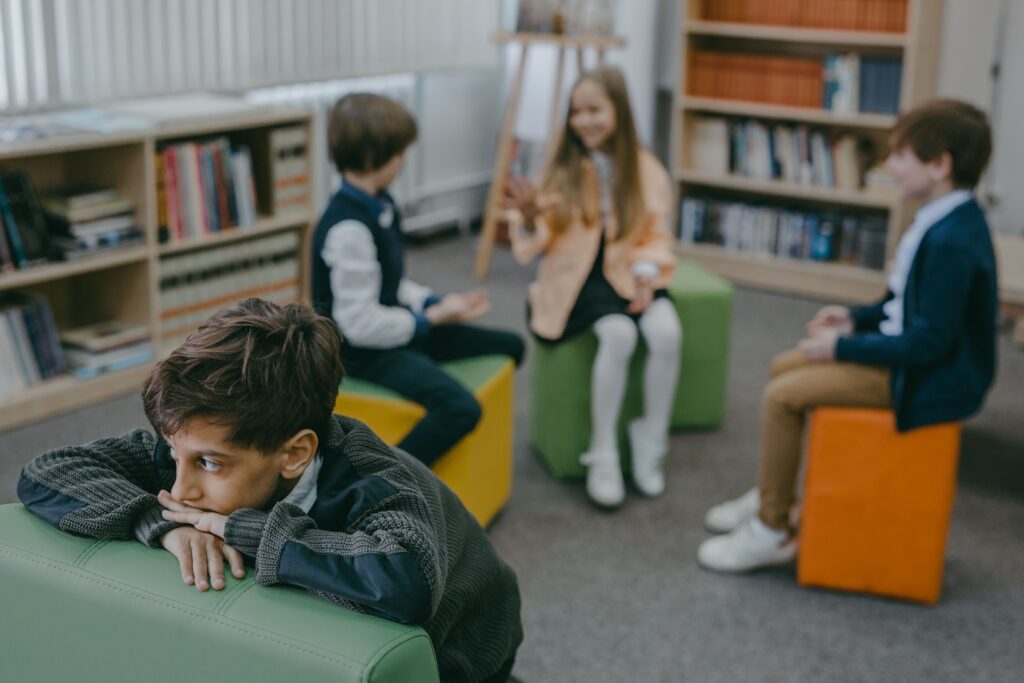
By 10:40, two of those same children are in a meltdown over a single yellow crayon. The teacher knows the curriculum was delivered well. She also has no data to prove it landed, and no protocol that tells her what to do differently for the child who has been melting down at 10:40 every day this month.
That gap — between a curriculum that teaches well and a curriculum that measures and responds — sits at the heart of the largest category of preschool social-emotional learning programs in the published research. Omran’s 2026 scoping review on Pre-Kindergarten behavioral and SEL frameworks found that universal SEL curricula made up the largest portion of the included literature [1]. They are the default. They are also, by their own design, only doing part of the job.
What Counts as a Universal SEL Curriculum
In a Pre-K context, a universal SEL curriculum is a structured, classroom-wide program that teaches social and emotional skills to every child in the room through scripted lessons, songs, stories, puppets, and shared routines.
The “universal” piece matters: these programs are designed to be delivered the same way to the whole class, regardless of any individual child’s behavioral profile. Every four-year-old gets the same lesson on naming feelings on the same day.
This is in deliberate contrast to tiered intervention systems, where instruction or support intensifies based on what a particular child needs. Universal SEL is the first floor — the part everyone walks through. In a fully built behavioral framework, it would sit alongside more targeted small-group and individualized supports, but in most preschool classrooms, the universal layer is the entire structure.
The Omran review identifies three universal SEL programs as the most-cited examples in the Pre-K literature it screened: Second Step, PATHS, and the Kindness Curriculum [1].
The Evidence Behind Them Is Real
Before naming the limitations, it is worth being clear about what these programs actually deliver, because the answer is more than nothing.
Across the studies the scoping review examined, children who participated in universal SEL curricula showed real, documented improvements in three areas:
- Emotional vocabulary — children learn the words for what they’re feeling, and they begin to use them.
- Prosocial behavior — sharing, turn-taking, and helping behaviors increase in classroom observations.
- Teacher-rated social competence — adults working with these children rate them higher on standardized social-skill measures after participation [1].
These outcomes are not trivial. A child who can name “frustrated” is a child who is partway toward regulating that feeling. A classroom where prosocial behaviors are more common is a classroom where a teacher can spend more time teaching and less time refereeing.
The research-based social emotional learning curriculum field has, over decades, accumulated genuine evidence that structured SEL beats unstructured goodwill.
This is why these programs reached the scale they did. Second Step has reached tens of thousands of classrooms [1]. PATHS demonstrated measurable gains in emotional competence in foundational research going back to the mid-1990s [2]. The category, as a whole, is not snake oil.
A Closer Look at the Three Most-Cited Programs
The three programs the review repeatedly surfaces are worth understanding individually, because each one represents a slightly different design philosophy within the universal SEL category.
Second Step
Second Step is built around scripted lessons — short, sequenced units that teachers deliver in defined slots during the week, often using puppets, photo cards, and structured songs. The scripting is a genuine strength: a teacher who has never taught the program before can pick up the kit and run a recognizable Second Step lesson on the first try. That lowers the implementation barrier in a way that matters for a workforce facing high turnover.
The trade-off is what the scripting cannot do. As the Omran review notes, Second Step does not include a tiered intervention architecture, so every child gets the same activity regardless of behavioral profile [1], [3].
It also generates no standardized quantifiable behavioral data a teacher could track over time or a researcher could later analyze [1]. A child who is thriving and a child who is melting down twice a day both receive the same activity at the same time. The curriculum is delivered. Whether it landed differently for those two children is invisible.
PATHS
PATHS — Promoting Alternative Thinking Strategies — is the older of the three, with a foundational evidence base going back to Greenberg and colleagues in the mid-1990s, where it demonstrated measurable gains in emotional competence among school-aged children [2]. It has since been adapted for younger learners.
The structural problem the Omran review flags is developmental fit. PATHS was originally designed for elementary students, and its emotional regulation strategies lean heavily on verbal and cognitive processing — the kind of self-talk, perspective-taking, and reasoning that older children can use [1], [2].
Many three- and four-year-olds, especially those in active stress states, do not yet have access to that kind of processing. Shanker’s self-regulation work argues that a child whose nervous system is in a stress response cannot reach for language-based strategies in the first place [4]. A curriculum that asks them to is asking the wrong thing of the wrong system.
A23 — Start in the Body (Gap 3) explores this developmental mismatch in more detail.
The Kindness Curriculum
The Kindness Curriculum sits in the universal SEL category as a structured preschool program built around short, daily activities centered on attention, kindness, and prosocial awareness. The review identifies it among the three most-cited universal SEL programs for the Pre-K age range [1].
It shares the category’s overall pattern: teachable, deliverable, evidence-supported on the outcomes it targets — and structurally missing the tiered response system and classroom-level data tool that a comprehensive Pre-K framework would need.
The Structural Limitations: Two Things Universal SEL Does Not Do
The Omran review draws a careful distinction here. The limitation of the universal SEL category is not about efficacy. These programs work on what they were built to work on. The limitation is structural — a question of what is missing from the design itself [1].
Two missing pieces matter most.
No Tiered Intervention Architecture
A tiered framework — often referred to as a Multi-Tiered System of Supports, or MTSS — sorts response intensity into layers. Tier 1 is what every child receives. Tier 2 is more targeted small-group support for children whose needs are not being met by Tier 1 alone. Tier 3 is intensive individual intervention for the small number of children whose needs require it [5].
Universal SEL curricula, by definition, deliver Tier 1. None of the programs in this category, as the Omran review documents, build the Tier 2 or Tier 3 layers into the curriculum itself [1]. A school can attempt to bolt on additional support from a separate system, most commonly Positive Behavioral Interventions and Supports (PBIS) at the school-wide level [5], but the integration is not native.
The result, in classroom terms, is that the child who is melting down every day at 10:40 receives exactly the same curriculum as the child who is thriving — until someone, somewhere, decides to refer them elsewhere.
A14 — PBIS in Pre-K examines why PBIS by itself does not solve this either.
No Quantifiable Classroom-Level Data
The second missing piece is measurement. Universal SEL curricula do not generate standardized quantifiable behavioral data that a classroom teacher can collect during the normal flow of instruction [1].
The dominant measurement approach in the broader Pre-K research literature relies on specialist-administered standardized assessments — instruments like the Social Skills Rating System, the BASC-3, the Devereux Early Childhood Assessment (DECA), and the Strengths and Difficulties Questionnaire (SDQ) [1].
These tools are rigorous, but they require training, structured administration time, and specialist availability that most preschool classrooms simply do not have.
This is why a teacher can know in her gut that Second Step is working in her room and still have no defensible data to back that up. It is also why the evidence base for the whole category has been built by researchers coming into classrooms, not by the educators living in those classrooms day after day.
A19 — The Measurement Problem develops this point in depth, including why a measurement gap eventually becomes a funding gap.
“Great at Teaching, Not Built to Measure” — Compared at a Glance
The shorthand for the universal SEL category is straightforward, and it sets up the comparison that drives the rest of the Pre-K framework conversation.
| What universal SEL curricula do well | What universal SEL curricula do not do |
|---|---|
| Teach emotional vocabulary across the whole class [1] | Differentiate the response based on which child is in front of you [1] |
| Build prosocial behavior in whole-class settings [1] | Provide Tier 2 or Tier 3 supports inside the curriculum itself [1] |
| Improve teacher-rated social competence on standardized measures [1] | Generate classroom-level data a teacher can collect during instruction [1] |
| Lower implementation barriers through scripted, ready-to-deliver lessons | Tell the teacher what to do differently tomorrow for the child who melted down today |
The category’s strengths and its limitations are two sides of the same design choice. “Universal” means same lesson, same time, same expectation — and that uniformity is what makes the programs scalable and what prevents them from being differentiated.
What This Means for Teachers
For a Pre-K teacher choosing or using a universal SEL curriculum, the practical implication is straightforward: keep using it, and stop expecting it to do work it was never built to do.
A preschool SEL curriculum in this category is a Tier 1 instructional tool. It teaches. It builds vocabulary and routines. It gives the classroom a shared language for emotion and behavior, which matters. What it does not do — what no program in this category does, according to the Omran review [1] — is tell you which child needs something more intensive, give you a quick way to record what you observed at circle time, or produce evidence you can show a director, a funder, or a family at conferences.
That extra layer has to come from somewhere else. Right now, in most classrooms, it does not come from anywhere — which is one of the reasons the review documents a national crisis in Pre-K behavioral support, with expulsion rates roughly three times higher than in K-12 and only about 40% of Pre-K classrooms implementing any structured SEL program at all [1], [6], [7].
What This Means for Curriculum Developers
For curriculum developers, the implication is sharper. The universal SEL category, as currently constituted, has largely saturated the part of the design space it occupies. There are credible, well-evidenced, widely-used programs serving the Tier 1 instructional slot. Building another scripted whole-class curriculum without addressing the structural gaps would add to the inventory without addressing the problem.
The Omran review identifies four structural features that no existing framework currently combines: integrated MTSS-tiered architecture inside the SEL curriculum, an educator-operable quantifiable classroom rubric, somatic regulation instruction calibrated for ages 3 to 5, and substitute-teacher-ready scripted protocols [1].
Universal SEL curricula address the SEL teaching component well. They were not designed to address the other three. A next generation of preschool social-emotional learning curriculum would need to start from a different premise — one that treats teaching, tiering, measurement, and substitute-readiness as a single integrated design problem rather than four separate ones.
A20 — The Four Missing Pieces] is the hub article that maps that full gap analysis.
The author of the scoping review is currently developing one such framework, the Steady Minds Curriculum, as the basis of a forthcoming action-research thesis [1]. That work is in early development and pilot stages and has not yet been evaluated; nothing in the published literature today combines all four features the review identifies as essential.
A26 — Introducing Steady Minds] covers that forthcoming project.
The Bottom Line
Universal SEL curricula are the largest, most-evidenced, and most-used category of preschool SEL classroom curriculum in the published Pre-K literature [1]. They teach what they were built to teach. They do not — and were never designed to — tier their response to individual children or generate the classroom-level data that a real measurement and evaluation system requires.
For a teacher, that means a universal SEL program is a starting point, not a complete behavioral support system. For a curriculum developer, it means the field’s largest category is not the field’s solution — it is the field’s foundation, waiting for the layers above it to be built.
Frequently Asked Questions
1. What is a universal SEL curriculum in Pre-K?
A universal SEL curriculum is a structured, classroom-wide social-emotional learning program delivered the same way to every child in the room through scripted lessons, stories, puppets, and routines. In the Pre-K context, the three programs most often cited in the published literature are Second Step, PATHS, and the Kindness Curriculum [1].
2. Do universal SEL curricula actually work?
According to Omran’s 2026 scoping review, children in classrooms using these programs show real improvements in emotional vocabulary, prosocial behavior, and teacher-rated social competence [1]. The evidence is strongest on what the curricula are explicitly built to teach.
The limitation is structural rather than efficacy-based: these programs do not include a tiered intervention layer for children who need more support, and they do not produce classroom-level data a teacher can collect during normal instruction [1].
3. Why isn’t a strong universal SEL curriculum enough on its own?
Because “universal” means every child gets the same lesson at the same time. A child whose needs are not being met by the Tier 1 lesson does not automatically receive anything more intensive from inside the curriculum itself [1].
The Omran review identifies the absence of integrated tiering, classroom-level measurement, somatic regulation instruction, and substitute-ready protocols as four structural gaps that no current Pre-K framework — universal SEL included — fully addresses [1].
Key Takeaways
- Universal SEL curricula make up the largest portion of the published preschool SEL literature, with Second Step, PATHS, and the Kindness Curriculum cited most often [1].
- These programs produce documented gains in children’s emotional vocabulary, prosocial behavior, and teacher-rated social competence [1].
- Their limitation is structural, not about efficacy: they lack tiered intervention architecture and do not generate quantifiable classroom-level data educators can collect during instruction [1].
- Scripted scalability and uniform delivery are simultaneously the category’s strength and its constraint.
- For teachers, a universal SEL curriculum is a credible Tier 1 instructional tool, but it is not a complete behavioral support system.
- For curriculum developers, the next generation of Pre-K SEL must treat teaching, tiering, measurement, and substitute-readiness as a single integrated design problem.
References
[1] Omran, R. (2026). Behavioral modification and social-emotional learning frameworks in Pre-Kindergarten settings: A scoping review of the literature [Preprint, Version 1.0]. Zenodo. https://doi.org/10.5281/zenodo.20532510
[2] Greenberg, M. T., Kusche, C. A., Cook, E. T., & Quamma, J. P. (1995). Promoting emotional competence in school-aged children: The effects of the PATHS curriculum. Development and Psychopathology, 7(1), 117–136.
[3] Committee for Children. (2011). Second step: A violence prevention curriculum. Committee for Children.
[4] Shanker, S. (2016). Self-reg: How to help your child (and you) break the stress cycle and successfully engage with life. Penguin Press.
[5] Sugai, G., & Horner, R. H. (2009). Responsiveness-to-intervention and school-wide positive behavior supports: Integration of multi-tiered system approaches. Exceptionality, 17(4), 223–237.
[6] Gilliam, W. S. (2005). Prekindergarteners left behind: Expulsion rates in state prekindergarten programs. Yale University Child Study Center.
[7] Yoder, N. (2014). Teaching the whole child: Instructional practices that support social-emotional learning in three teacher evaluation frameworks. American Institutes for Research.
