
The 60-Second Rubric: Pre-K SEL Measurement Reform
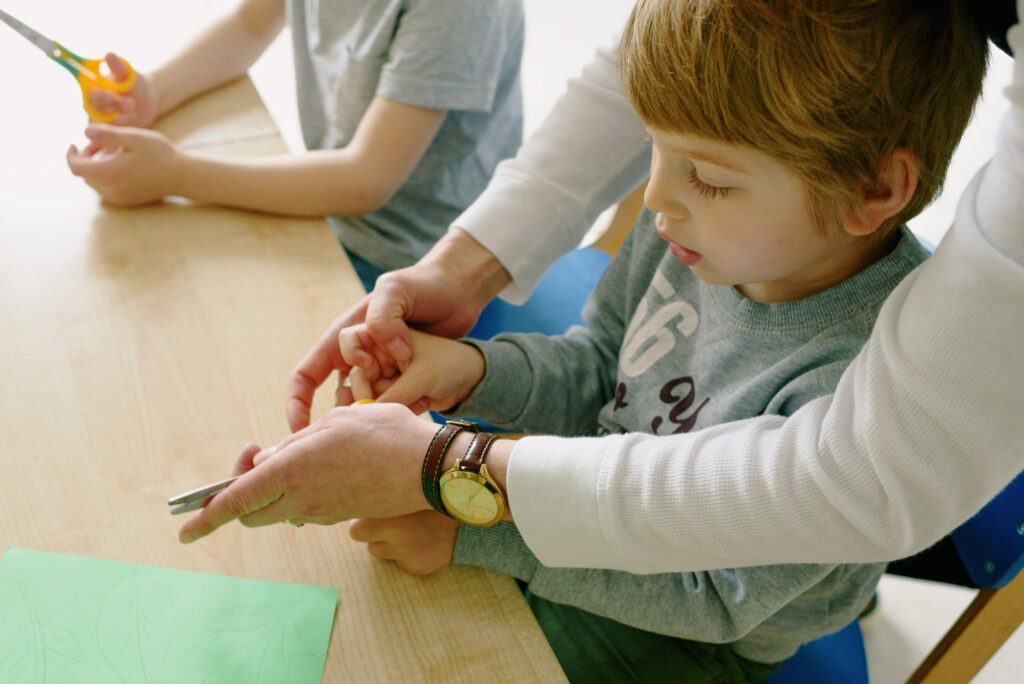
A Pre-K teacher kneels beside a four-year-old who has just shoved another child off a chair. She redirects. She breathes with him. She walks him to the calm corner and stays until his shoulders drop. By the time the moment is over, the next activity has started. There is no scorable observation in her hand, no validated rubric she can complete in the thirty seconds before snack, no record that anyone outside this classroom will ever see.
Multiply that scene by every behavioral incident in every Pre-K classroom across the country. What you get is one of the most consequential blind spots in early childhood education: the people who actually witness the behavior almost never produce the data about it.
This is Gap 2 in the scoping review by Omran (2026) [1]. The review documents that no existing Pre-Kindergarten behavioral or social-emotional learning (SEL) framework provides a standardized, quantifiable rubric a classroom educator can complete in under a minute as part of regular instruction [1]. Not one. The implications of that absence reach well beyond classroom convenience.
What the Review Actually Found
The scoping review followed PRISMA-ScR guidelines [2] to map the literature on behavioral modification and SEL frameworks for children aged 3 to 5, drawing on Google Scholar, ERIC, PsycINFO, and CINAHL [1].
Final inclusion counts and the PRISMA-ScR flow diagram are pending the completion of the screening phase prior to journal submission [1]. Even at this stage, the qualitative direction of the measurement finding is, in the author’s own words, already clear and unlikely to shift [1].
Across the included literature, the dominant measurement approach was specialist-administered standardized assessment [1]. Four instruments appeared repeatedly:
- Social Skills Rating System (SSRS)
- Behavior Assessment System for Children, Third Edition (BASC-3)
- Devereux Early Childhood Assessment (DECA)
- Strengths and Difficulties Questionnaire (SDQ)
These are rigorous tools [1]. They are also tools that require specialized training, structured administration time, and specialist availability — none of which describes the operational reality of most Pre-K classrooms [1].
The research community has built a substantial evidence base on Pre-K behavioral frameworks, but almost none of that evidence was generated by classroom teachers. It was generated by researchers, specialists, and trained assessors who came into classrooms with standardized instruments, administered them under controlled conditions, and left with data most teachers could never collect on their own [1].
The Specific Gap: A Rubric Scorable in Under a Minute
Of all the frameworks surfaced during screening, none provided a validated rubric a Pre-K educator could use to score behavioral observations in under sixty seconds as part of normal daily instruction [1].
The review’s language on this point is unusually direct: that absence is not a footnote, it is a structural problem that limits everything — how programs get evaluated, how results get compared across schools, and whether the evidence base can ever grow beyond what outside specialists are willing to come in and measure [1].
It is worth pausing on what educator-operable actually means here, because the phrase gets used loosely. Drawing on the scoping review, a rubric is educator-operable when:
- It can be scored by the person standing in the room — not by an outside specialist who visits monthly [1].
- It can be completed in under a minute — meaning a teacher can use it between transitions, during a lull at center time, or immediately after an incident, without disrupting instruction [1].
- It produces quantifiable values that can be tallied, tracked over weeks, compared across days or classrooms, and aggregated for analysis [1].
- It requires no specialist training to administer reliably — because the teaching workforce in Pre-K classrooms cannot be assumed to have it [1].
The fourth criterion matters more than it first appears. The frameworks currently producing the strongest measurement data depend on training and staffing conditions that do not exist in the majority of Pre-K programs, particularly those serving high-needs communities [1].
Standard Instruments vs. Educator-Operable Measurement: A Side-by-Side
The contrast between what the field has and what the field needs is worth seeing in one frame.
| Feature | Standard Specialist Instruments (SSRS, BASC-3, DECA, SDQ) | Educator-Operable Rubric (Currently Absent) |
|---|---|---|
| Administered by | Trained specialist or researcher | The classroom teacher present in the room |
| Time required | Structured assessment session | Under 60 seconds |
| Frequency | Periodic — quarterly, annual, or study-based | Daily or per-incident, embedded in routine |
| Setting | Controlled conditions | Live classroom, mid-instruction |
| Data ownership | Specialist or research team | Educator and program |
| Reliability training | Required, often substantial | Designed for use without prior training |
| Continuity if staff change | Depends on specialist availability | Functions across personnel transitions |
Source: synthesized from the measurement findings in the Omran (2026) scoping review [1].
The left column describes the gold standard for evaluating Pre-K behavioral programs in research settings. The right column describes the missing tool the review identifies — and the absence on the right is what blocks the field from generating routine evidence at the classroom level.
Why the Measurement Gap Reaches Funders and Policymakers
The absence of an educator-operable rubric is not a niche operational complaint. It is the bottleneck that prevents Pre-K behavioral programs from generating the kind of routine evidence base that policymakers and funders require to justify continued investment [1].
The mechanism is straightforward. When measurement depends on outside specialists, evaluation happens only when those specialists are available, only in settings willing to host them, and only on schedules they can support.
The resulting evidence base is shaped less by what works in real classrooms than by where researchers have been able to bring instruments. Findings rest on a narrow subset of programs that could absorb the cost and disruption of formal assessment [1].
As Omran (2026) frames it, a framework without a built-in measurement tool is a framework that cannot build its own evidence base [1]. Without educator-operable measurement, the behavioral outcomes of Pre-K program implementation cannot be reliably tracked over time, compared across settings, or used to generate the kind of researchable data that policymakers and funders require to justify continued investment [1].
For funders, the implication is concrete. A program whose effectiveness depends on what outside specialists are willing to come in and measure has a structurally fragile evidence base [1]. The pattern also tends to concentrate validated evidence in well-resourced settings — exactly the settings that already have the most support — while leaving programs in under-resourced communities without the data they would need to make a case for sustained funding [1].
For the broader implementation pattern this sits inside, see [A19 — The Measurement Problem].
What This Looks Like on a Tuesday
Consider what the gap does to a typical Pre-K week. A teacher implements an evidence-based universal SEL curriculum — Second Step, say, or PATHS, or the Kindness Curriculum [1]. She delivers the lessons. The children participate. She sees, anecdotally, that one child is escalating less often and another is using emotion words she has not heard from him before.
But she has no validated way to convert those observations into data. The standardized instruments her program uses, if any, are administered twice a year by a visiting specialist [1]. Whatever quantitative picture exists comes from those two snapshots — not from the hundreds of small behavioral moments she has actually witnessed and shaped.
This is the operational reality the review describes [1]. The teacher is doing real, observable work that produces real, observable changes. Nothing in the framework around her converts those observations into structured data that would let her, her program leader, her district, or a funder track what is happening in her classroom over time.
Multiply that situation across the field and you get the structural condition the review names: a literature dominated by evidence generated by specialists, in conditions that do not reflect typical Pre-K classrooms [1]. The frameworks producing the most rigorous data are also, in most cases, the frameworks hardest to sustain when staff turnover, specialist availability, or substitute coverage interfere with implementation [1].
Design Principles for a 60-Second Rubric
The review does not propose a finished rubric — but it does specify what one would have to do. Reading the Discussion’s curriculum implications closely, the design constraints are explicit [1]:
- Operable by the person standing in the room, not by someone brought in from outside [1]. This rules out instruments that require specialist training.
- Completable in under a minute [1]. This rules out anything that disrupts instruction, requires setup, or pulls the educator away from supervision of other children.
- Quantifiable, not narrative [1]. Values that can be tallied are what allows tracking, comparison, and aggregation.
- Reliable across personnel changes [1]. This is what allows continuity when the lead teacher is absent — a direct connection to the substitute-readiness gap.
A rubric meeting these criteria would not replace standardized specialist instruments. It would complement them — generating the high-frequency, classroom-level data current instruments cannot produce, while still allowing for periodic specialist assessment when conditions allow.
Where Educator-Operable Measurement Fits in the Four-Gap Picture
Gap 2 does not stand alone. It interlocks with the other three structural gaps the review identifies, and the connections are direct [1]:
- Tiering (Gap 1) depends on measurement. A framework cannot reliably move a child between intervention tiers if there is no quantitative basis for the movement [1]. See A21 — Tiered Support Inside the Curriculum.
- Somatic regulation instruction (Gap 3) is hard to evaluate without classroom-generated data. Whether a child’s physiological regulation is improving over a unit cannot be captured in a twice-yearly standardized assessment [1]. See A23 — Start in the Body.
- Substitute-readiness (Gap 4) requires that any scoring tool can be used by an educator who walked into the room for the first time that morning [1]. See A24 — When the Substitute Walks In.
A rubric that fails any one of these tests fails the operational standard the review specifies [1]. A rubric that meets all of them is the missing piece that lets the other three components function as a coherent system. The full four-gap picture is laid out in A20 — The Four Missing Pieces.
What This Means for the Field’s Next Move
The review’s central conclusion on this point is straightforward: the components exist, the justification is documented, and what comes next is the assembly [1].
The author is developing and piloting an original MTSS overlay called the Steady Minds Curriculum that aims to incorporate this measurement design alongside the other three structural features [1]. That work is in preparation and is not yet a tested, validated framework — it is the forward-looking response to the gap analysis the review surfaces [1].
For curriculum developers, the implication is that any new Pre-K SEL or behavioral framework — Steady Minds or otherwise — needs to treat educator-operable measurement as a load-bearing design feature, not an evaluation afterthought.
For researchers, the implication is that the field’s evidence base is currently shaped by what specialists can measure, not by what classrooms actually produce, and that this shapes which programs get studied, scaled, and funded.
For funders, the implication is that program selection criteria demanding outcome data need to be paired with realistic expectations about who can generate that data under typical Pre-K staffing conditions [1]. For more on the proposed framework, see A26 — Introducing Steady Minds.
Frequently Asked Questions
1. Why isn’t a 60-second rubric just a simpler version of existing tools like the SSRS or DECA?
The standardized instruments commonly used in Pre-K behavioral research — the Social Skills Rating System, BASC-3, Devereux Early Childhood Assessment, and Strengths and Difficulties Questionnaire — were designed for specialist administration under controlled conditions [1].
Shortening them does not solve the underlying problem, which is that the evidence base depends on personnel and time, classroom educators rarely have during instruction [1]. An educator-operable rubric is a different design category, not a condensed version of the same tool.
2. What does “educator-operable” specifically mean for measurement design?
Drawing on the scoping review, educator-operable measurement is administered by the person in the room rather than an outside specialist, takes under a minute to complete, produces quantifiable values (not narrative notes), and remains reliable when used by an educator who has not received specialist training in the instrument [1]. These four criteria together describe what is currently absent from the published Pre-K SEL framework literature [1].
3. Why does the measurement gap matter for funders and policymakers, not just teachers?
Because a framework without built-in classroom-level measurement cannot build its own evidence base over time [1]. Programs that depend on outside specialists for evaluation generate data only when those specialists are available, in settings able to host them, on schedules that fit research budgets.
Funders and policymakers requiring sustained outcome data to justify continued investment are, in effect, asking for evidence that current frameworks are structurally unable to produce at the classroom level [1].
Key Takeaways
- The Omran (2026) scoping review identifies the absence of a validated, educator-operable, under-60-second behavioral rubric as one of four structural gaps in current Pre-K SEL frameworks [1].
- The field’s evidence base is dominated by specialist-administered instruments — SSRS, BASC-3, DECA, and SDQ — that require training, time, and specialist availability most Pre-K classrooms do not have [1].
- A framework without a built-in measurement tool cannot build its own evidence base [1], which makes this gap a direct constraint on policy, funding, and program scaling.
- An educator-operable rubric would be scored by the person in the room, in under a minute, producing quantifiable data, and reliable without specialist training [1].
- Gap 2 interlocks with tiering, somatic regulation, and substitute-readiness; resolving it is a prerequisite for the other three to function together as a coherent system [1].
- The Steady Minds Curriculum is the author’s forthcoming attempt to assemble these features into a single framework; it is in development and piloting, not yet a validated tool [1].
References
Omran, R. (2026). Behavioral modification and social-emotional learning frameworks in Pre-Kindergarten settings: A scoping review of the literature [Preprint, Version 1.0]. Zenodo. https://doi.org/10.5281/zenodo.20532510
Tricco, A. C., Lillie, E., Zarin, W., O’Brien, K. K., Colquhoun, H., Levac, D., … Straus, S. E. (2018). PRISMA extension for scoping reviews (PRISMA-ScR): Checklist and explanation. Annals of Internal Medicine, 169(7), 467–473.
